Yawah
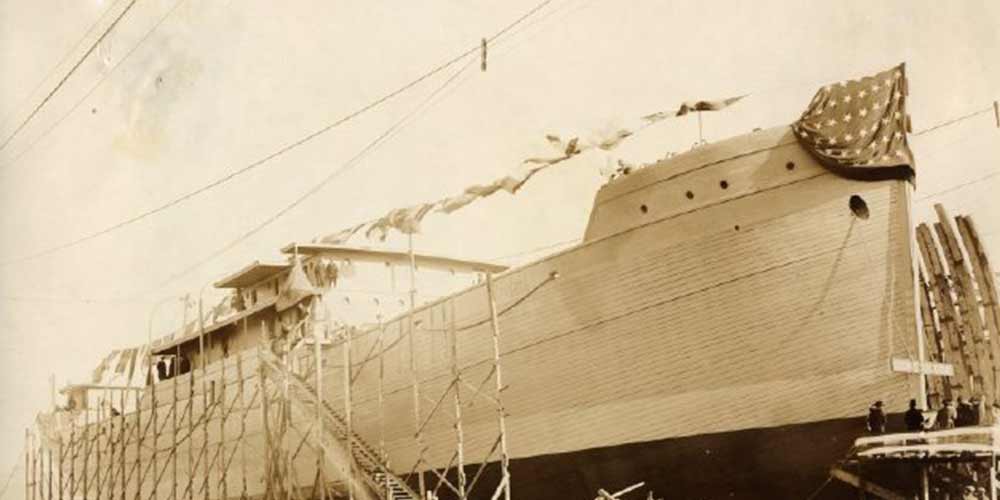
The story of Yawah may not be lengthy, but it is telling of the industrial boom that resulted due to the shortage of cargo vessels at the outset of the war. With the implementation of the U.S. Emergency Fleet Corporation, contract orders were sent out all across the country to build up the cargo fleet. Seemingly overnight, small towns with waterfront access were turned into massive shipyards. At the Shattuck Shipyard near Portsmouth, New Hampshire, where Yawah was built, close to 8,000 workers came together, by rail from towns over, to work on these vessels. Laboring day and night, a sense of community and pride was felt by the workers.
Explore
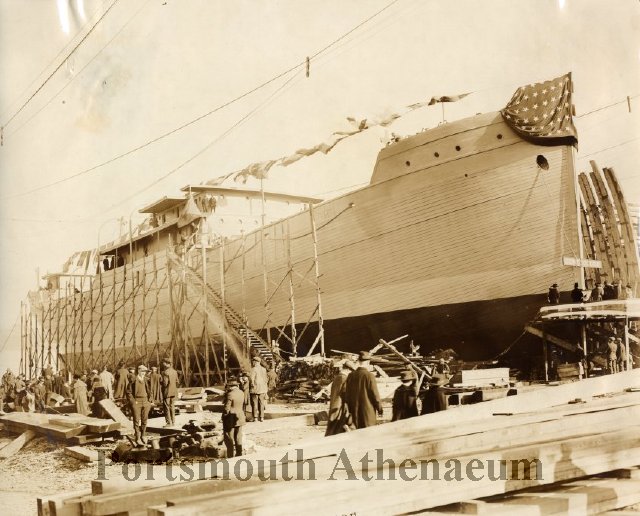 Launching of Contoocook (later named Yawah) at the Shattuck shipyard, Newington, NH, November 7, 1918. (Source: In memory of L. H. Shattuck and his daughter Althea, courtesy of the Portsmouth Athenaeum).
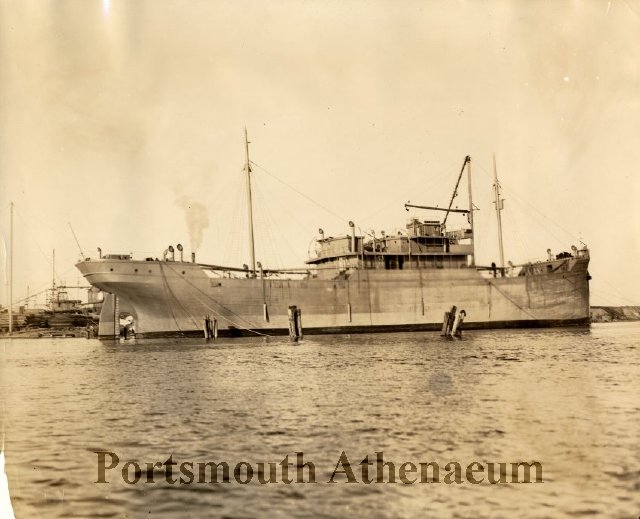 A view from the Piscataqua River at one of the wooden steamships built at the Shattuck shipyard, Newington, NH, vessel unknown. (Source: In memory of L. H. Shattuck and his daughter Althea, courtesy of the Portsmouth Athenaeum).
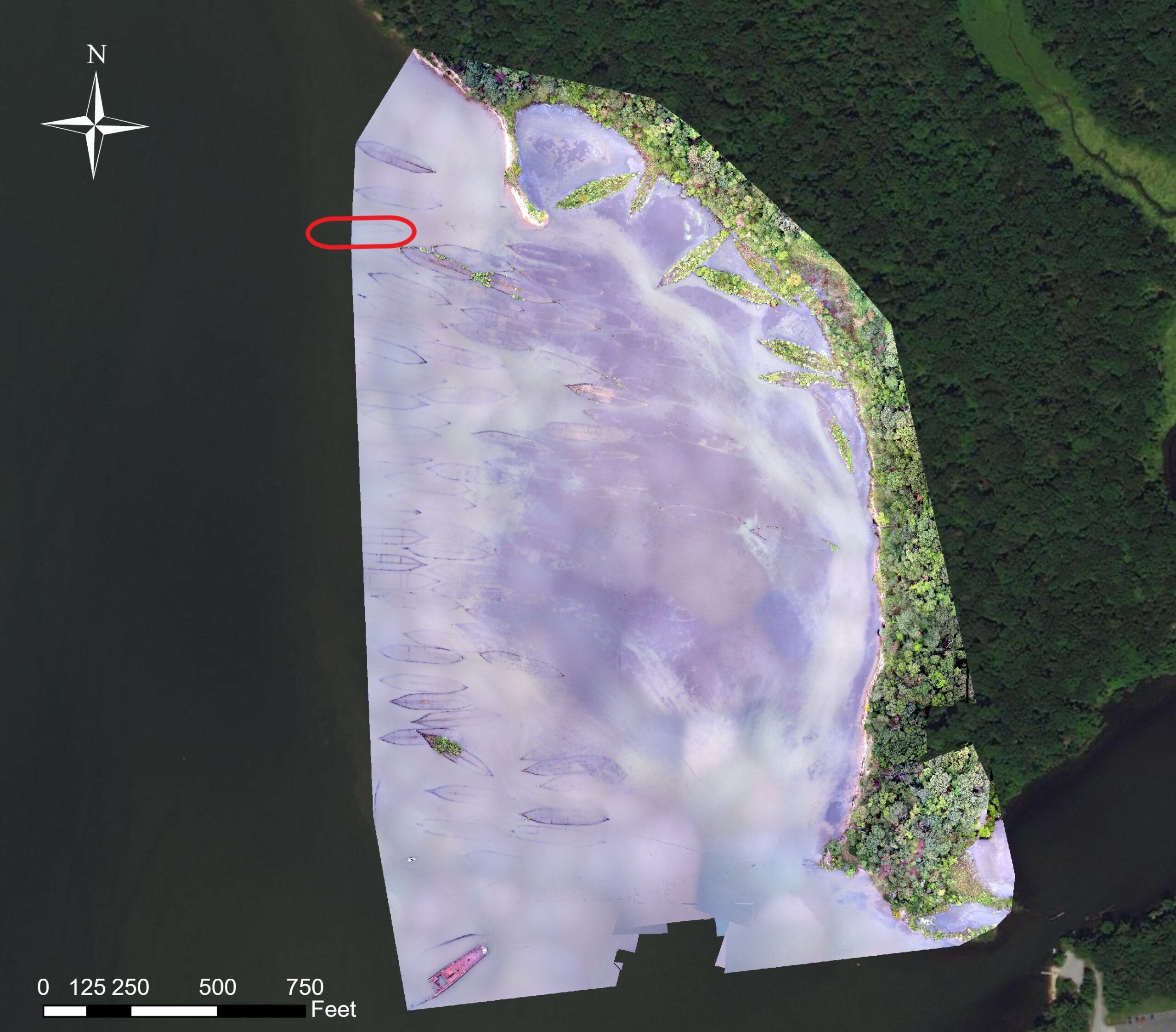 Aerial drone photographic mosaic of Mallows Bay, Maryland. Location of Yawah is circled in red. (Source: Duke University/NOAA).
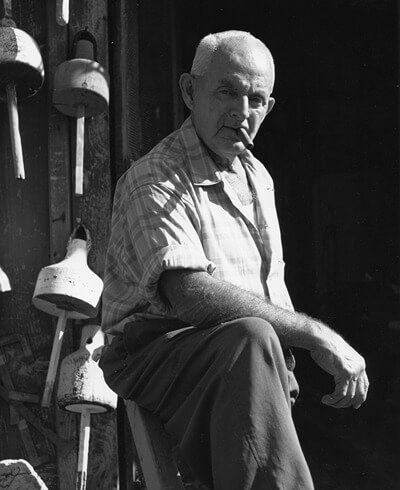 Elmer Brooks of Newington, New Hampshire, worked in the Shattuck shipyard building vessels for the United States Shipping Board during World War I. (Source: In memory of L. H. Shattuck and his daughter Althea, courtesy of the Portsmouth Athenaeum).