Benzonia
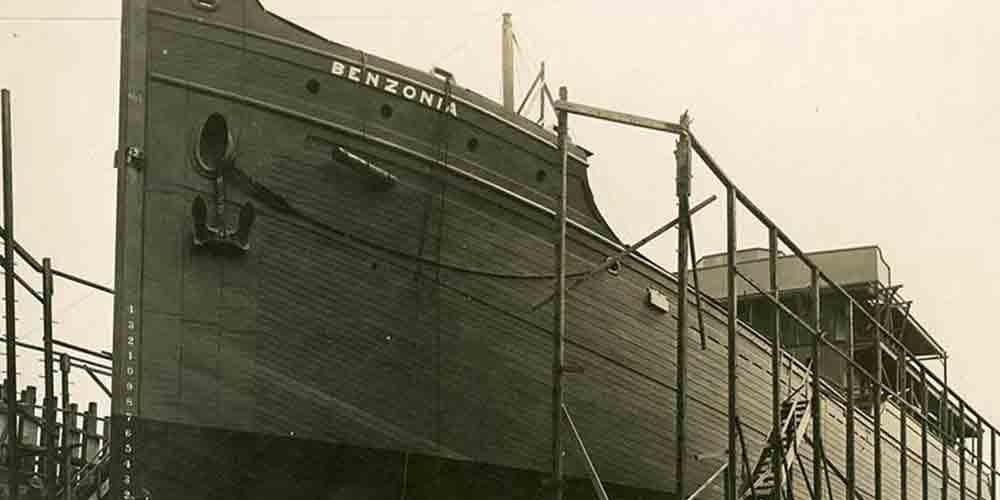
Benzonia, a wooden-hulled ship, was built by the G.M. Standifer Construction Company at one of its two shipyards along the Columbia River in Washington State. Named after a town in Michigan, Benzonia was styled as a Ferris-type cargo steamship. It was built during World War I for the U.S. Shipping Board as part of the large shipbuilding effort to quickly provide cargo ships for the war. It launched on July 13, 1918 to great fanfare. However, the war ended on November 11, 1918, before Benzonia could be fully used for its purpose.
Benzonia was sold in 1922 to Western Marine Salvage and came to Mallows Bay in 1929. Although Benzonia is not known for the work it did accomplish, it is an excellent example of the powerful force of nature. Nature is often unpredictable, and in 2003, Hurricane Isabel lifted the remains of Benzonia on top of the Caribou, another U.S. Shipping Board ship. Since 1929, many of the ships in the sanctuary have shifted from their original positions. Shifting is mostly due to seasonal changes in currents and weather patterns. Today, the Benzonia wreck may be the most impressive in the Ghost Fleet.
Explore
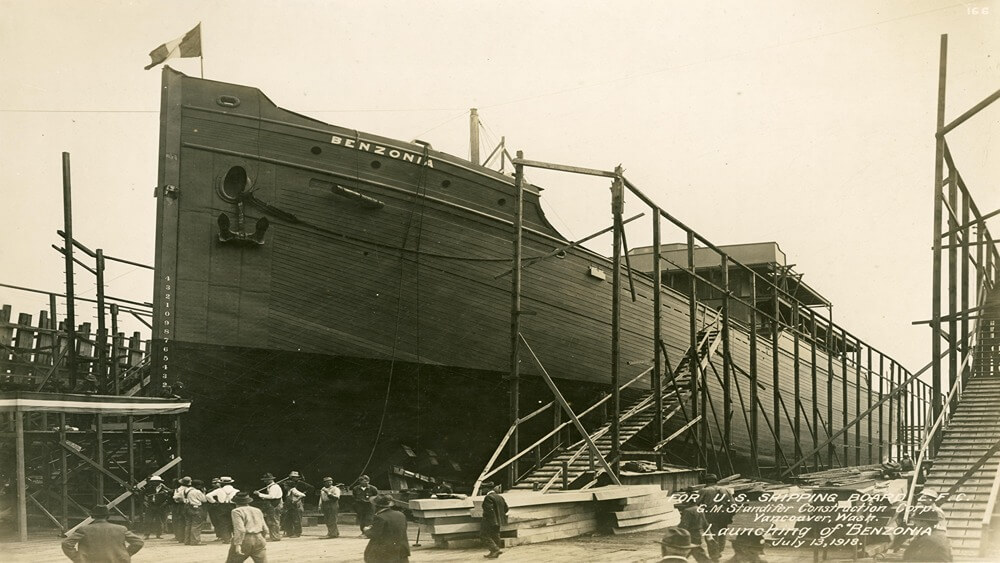 Photograph of the bow of Benzonia, just before launching into the water on July 13, 1918. (Source: Washington State Archives).
 The remains of Benzonia lifted on top of 18CH531 (Caribou). (Photo: Tyler Smith/NOAA).
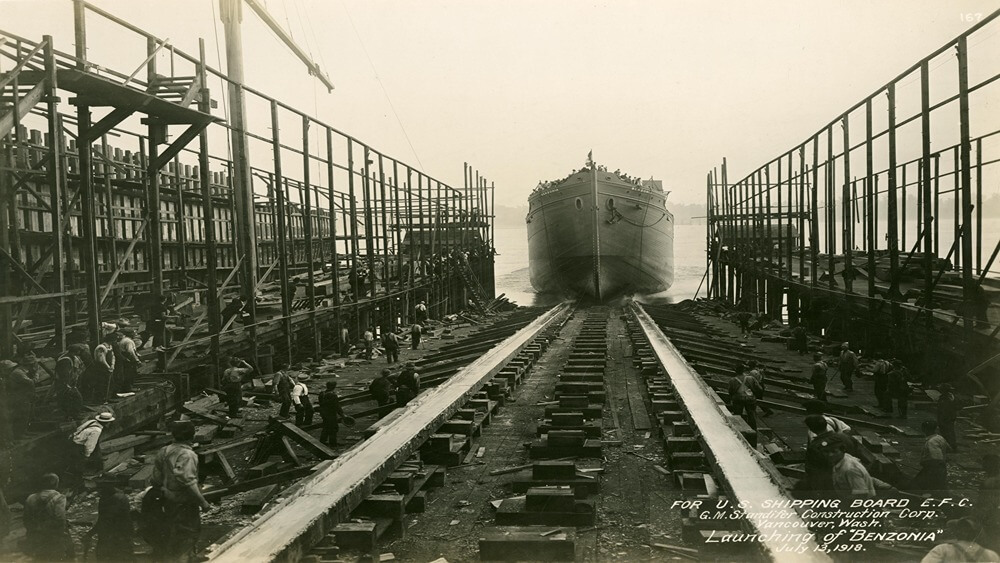 Photograph of Benzonia being launched into water. July 13, 1918. (Source: Washington State Archives).
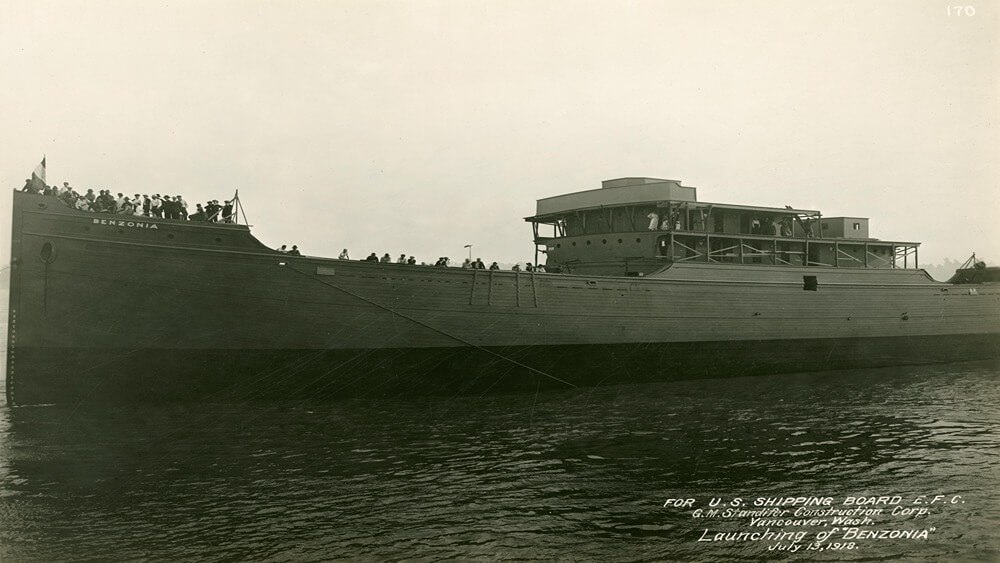 Photograph of the Benzonia on water July 13, 1918, Vancouver, Washington. (Source: Washington State Archives).
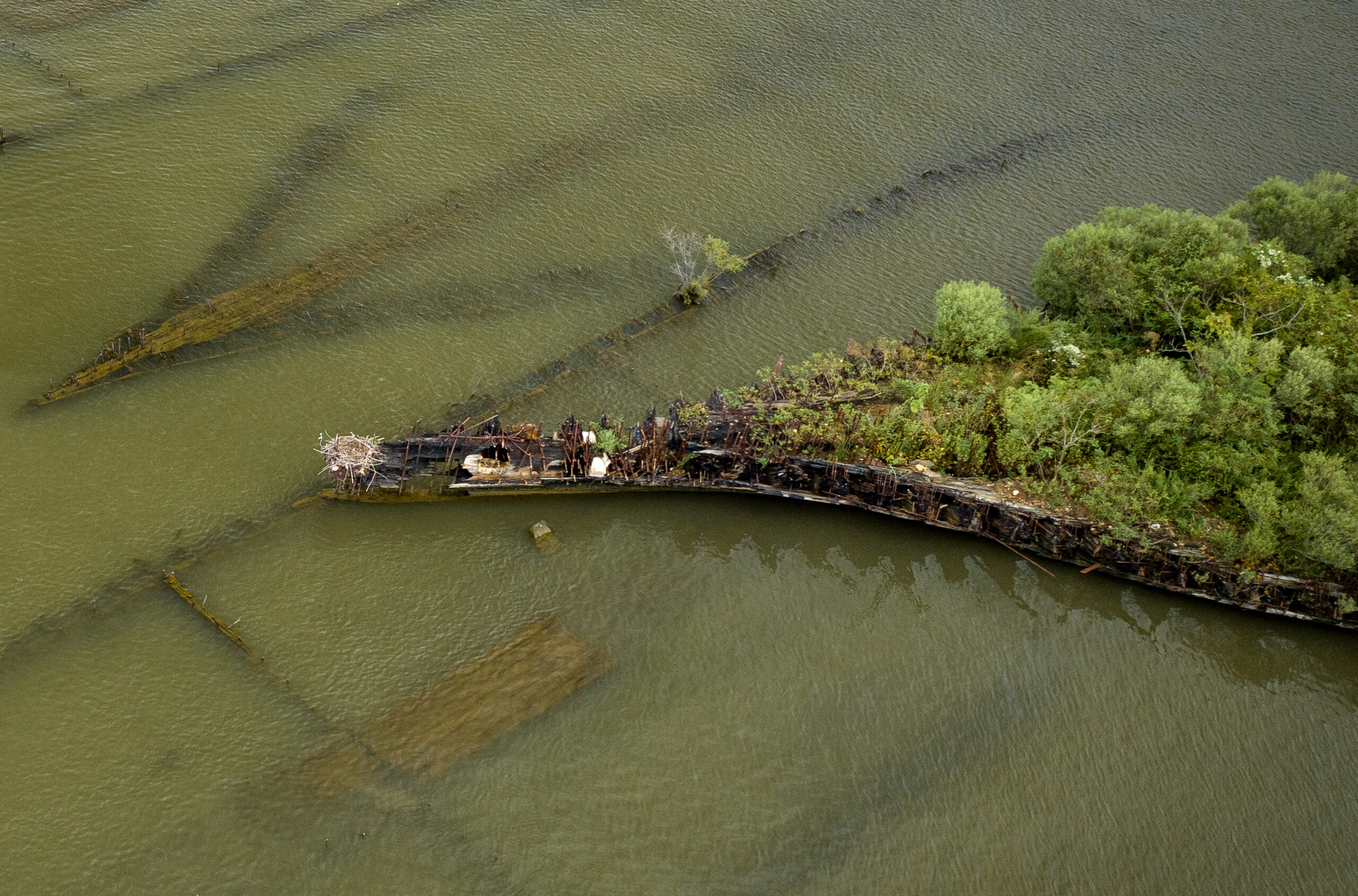 The bow of Benzonia with an Osprey nest. (Photo: Matt McIntosh/NOAA)
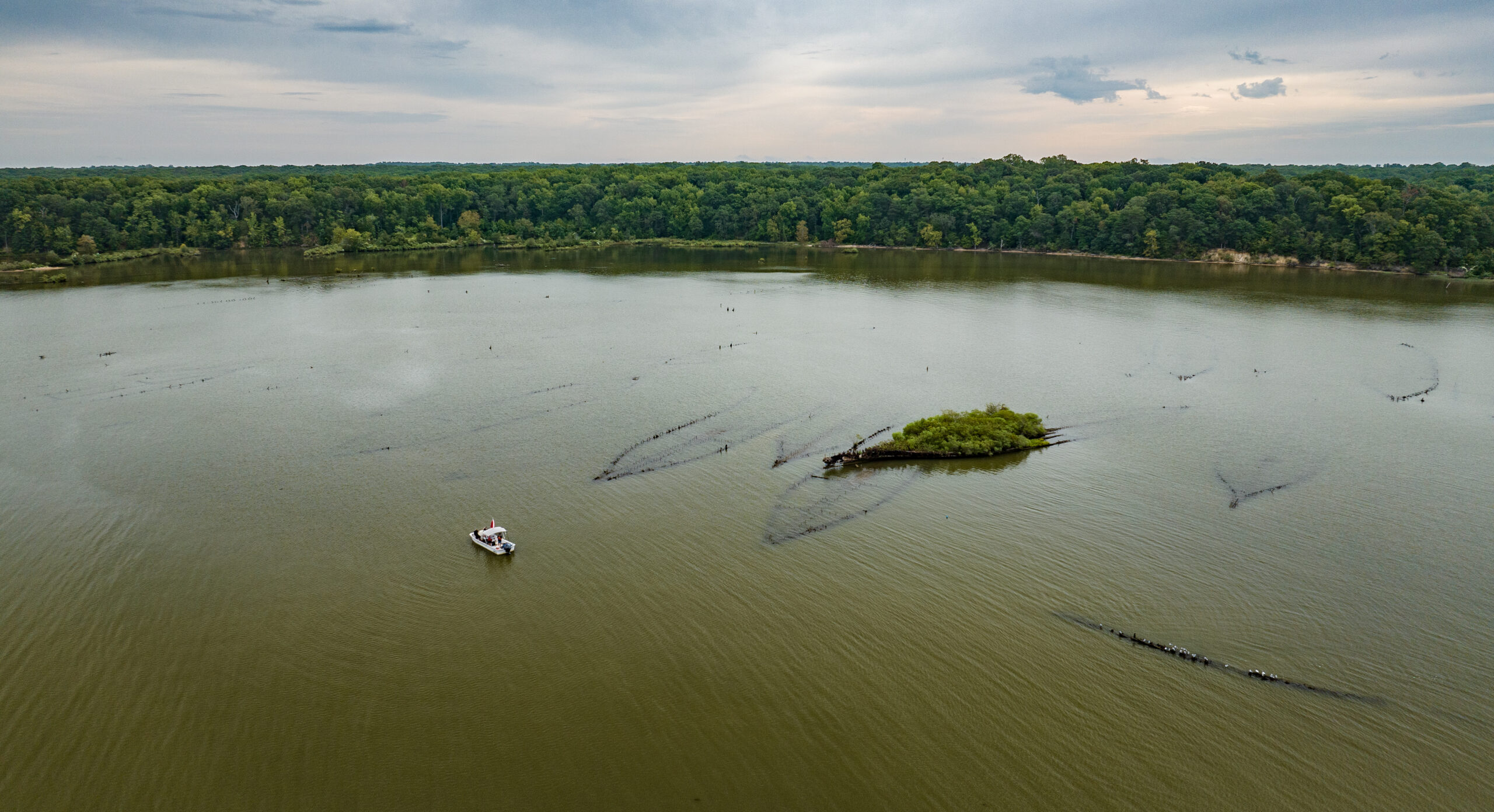 Benzonia as an island of life in Mallows Bay. (Photo: Matt McIntosh/NOAA)